


An A to Z Glossary Of Accessible Bathroom Terms
Quotes, specifications and drawings for accessible bathrooms are full of technical terms. Words like gully, tanking and former…
Read more
When planning an accessible bathroom, the shower, flooring and toilet often get most of the attention. However, the wall finish is also worth considering. It can affect how easy the room is to clean, how long the installation takes and the overall appearance of the bathroom.
At Easibathe, we use wall boards in our bathroom installations because they offer a practical, low-maintenance finish that works well in accessible spaces. But what are wall boards, and what makes them a good choice?
Wall boards are large waterproof panels designed to cover bathroom walls. Unlike traditional tiles, which are fitted individually, each board covers a much larger area. This means fewer joints across the wall, with edges and corners finished using suitable trims and sealing systems.
They are available in a range of colours, patterns and designs, including finishes that replicate natural stone, marble and traditional tiles. This makes it possible to achieve a modern, attractive bathroom without relying on individual wall tiles.
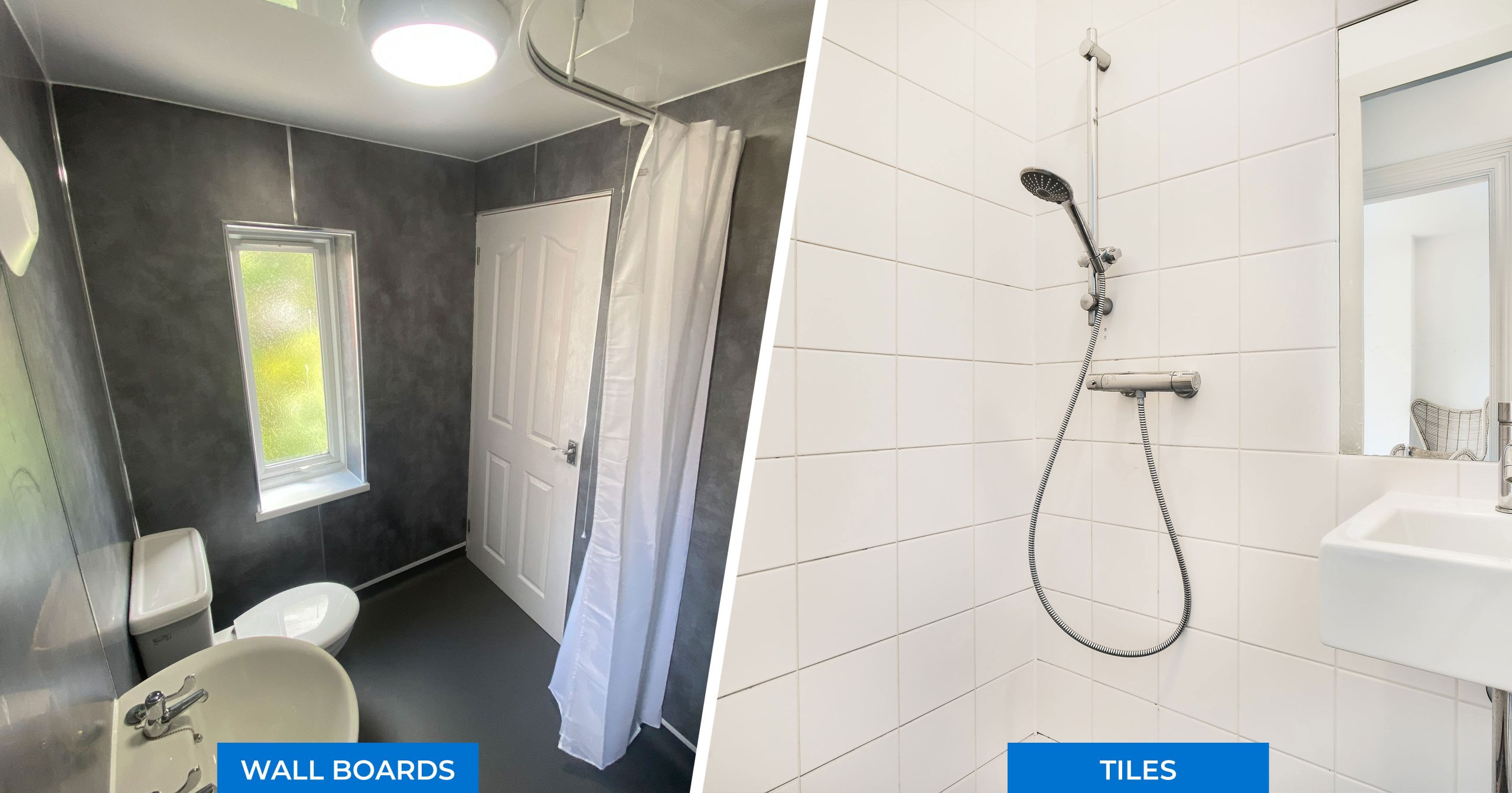
See the image below to look at the difference between wall boards and tiles in bathrooms.
There are several practical benefits to using wall boards, particularly in bathrooms that need to be easy to use and maintain.
Fewer joints – Large panels create fewer joints than traditional tiling. This gives the walls a smoother, more consistent finish, with fewer grout lines where dirt and mould can build up.
Easy to clean – The smooth surface can usually be wiped down with a basic cleaner, making everyday cleaning straightforward. With fewer grout lines to maintain, there is also less need to spend time scrubbing between individual tiles.
Quicker installation – Wall boards cover a larger area than individual tiles, which can make them quicker to fit. This can help reduce installation time and disruption, particularly important when adapting a bathroom that someone relies on every day.
A choice of designs – Wall boards are available in a variety of colours, patterns and finishes. Whether you prefer a simple, understated look or a design that replicates natural materials, there are options to suit different bathrooms and personal tastes.
Wall boards can provide a durable bathroom finish when the correct products and installation methods are used. However, like any bathroom surface, they need to be fitted and maintained properly.
The joints between panels, along with corners, edges and areas around fittings, must be sealed correctly to prevent water getting behind the boards. These areas should be checked from time to time to make sure the seals remain in good condition.
The quality of the boards and the way they are installed both play an important part in their long-term performance. Always follow the manufacturer’s cleaning and maintenance guidance to help keep the finish in good condition.
An accessible bathroom needs to be practical for the people using it, as well as easy to maintain. Wall boards offer several benefits that make them a suitable choice for these spaces.
Grab rails and shower seats – These features need secure fixings into a suitable supporting wall or reinforcement behind the finished surface. The required support and fixing positions should be planned before the boards are installed. The boards themselves should not be relied on to support their weight.
Waterproofing – In wet rooms, the walls and floor need a suitable waterproofing system to protect the structure behind the finish. The requirements can differ depending on the wall board system being used, so the manufacturer’s installation guidance should always be followed. This is particularly important around joints, corners, fittings and the wall-to-floor connection. Find out more about tanking and read our guide to wet rooms.
Wall-to-floor junction – The connection between the wall and floor needs a neat, waterproof finish. Easitrim is a two-piece profile that creates a seamless join between wall boards and flooring.

At Easibathe, we install wall boards because they provide a practical combination of easy cleaning, fewer joints and efficient installation. These qualities are particularly useful in accessible bathrooms, where the room needs to work well for everyday use.
We also recognise that appearance matters. A bathroom should feel comfortable and welcoming, not just functional. With a variety of colours and finishes available, wall boards allow us to create spaces that are both practical and attractive.
Yes. Wall boards designed for wet areas can be used in wet rooms when installed with the correct waterproofing and sealing system. Always follow the manufacturer’s instructions for the specific product.
Yes. Their smooth surfaces are generally easy to wipe down, and having fewer joints means there are fewer grout lines to clean and maintain.
Grab rails must be securely fixed to a suitable supporting wall or reinforcement behind the board. The board itself is not designed to support the weight, so fixing positions should be planned before installation.
Yes. They are available in a range of colours, patterns and finishes, including designs that replicate marble, stone and traditional tiles.
Wall boards offer a practical finish for accessible bathrooms, with fewer joints, straightforward cleaning and a quicker installation. Their range of designs also means you don’t have to compromise on appearance to achieve a bathroom that is easy to maintain.
At Easibathe, we use wall boards because they help us create bathrooms that are practical, attractive and suited to everyday needs. Combined with the right waterproofing and supporting features, they provide a finish that works well as part of an accessible bathroom adaptation.
For more information on the terms used in this guide, see our A to Z glossary of accessible bathroom terms.