


Supporting Thomas’ Journey Towards a More Accessible Home
Easibathe Helps Secure £2,500 Enterprise Mobility Grant for Thomas We are delighted to announce that an application submitted…
Read more
A wet room is a fully waterproofed, open-plan bathroom with level-access flooring, meaning there are no steps, thresholds, or barriers. The entire space is designed so water drains safely through a gully, creating a simple and accessible layout.
Because of this design, wet rooms are becoming an increasingly popular choice for those looking to improve bathroom safety, accessibility, and ease of use in the home.
One of the main differences between a wet room and a traditional bathroom is how the space is designed.
Wet rooms are designed with an open plan layout, and have a level access flooring throughout the full room. There are no obstacles such as shower trays or enclosures, which allows the room to function as one big space. This maximises the space, leaving you more room to manoeuvre freely and with confidence.
This is quite different to a traditional bathrooms as they feature shower trays, enclosures, cupboards which all pose as a potential hazard to someone who may be less confident when on the move. So for someone looking to improve their accessibility in their home, they should consider a wet room.
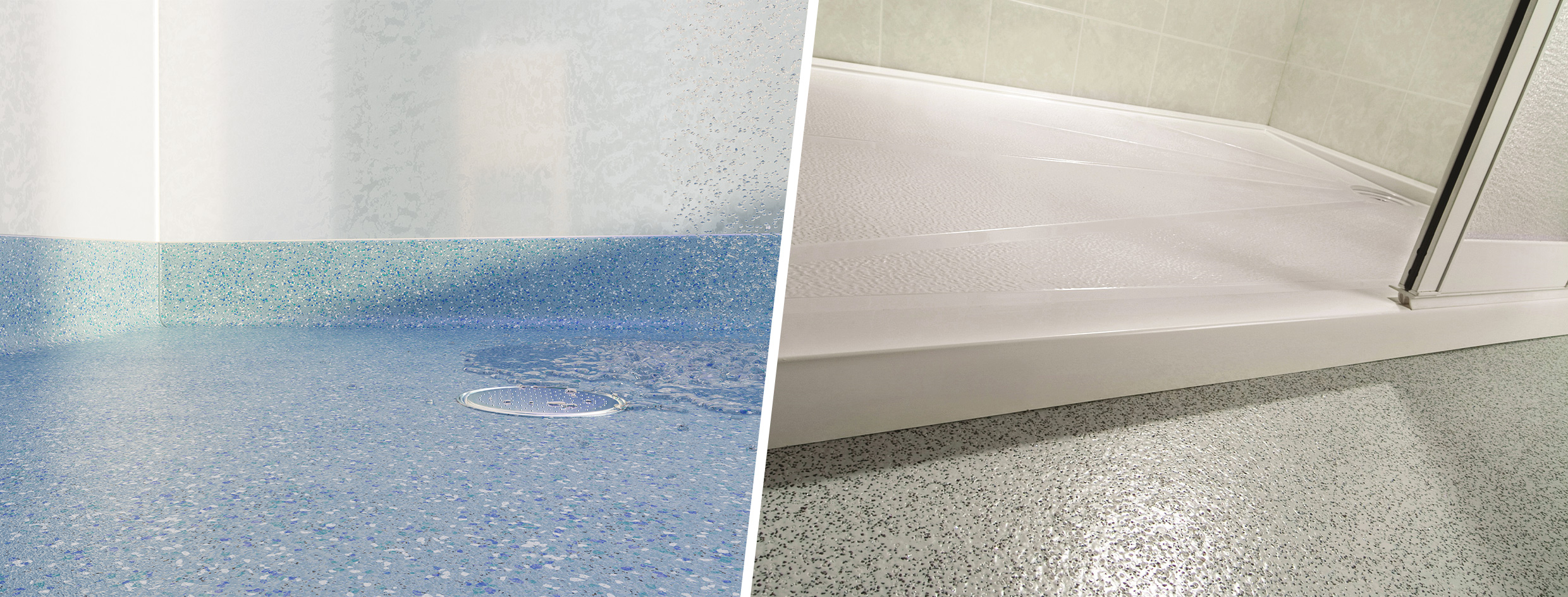
Wet rooms are designed so that the whole room can handle the water. The level access flooring is installed with a very slight slope towards the gully, so that water will run and safely be removed from the surface. With the full room being sealed and waterproofed, it significantly reduces the risk of leaks and hidden water damage which will lead on to further damages down the line.
In traditional bathrooms, waterproofing is only focussed in certain areas where water is going to be mainly used. Areas such as showers, sinks, baths are the main focus and while this still works well, it means water must stay in specific places and if anything was to leak or spill, then this could lead to water damage.
So in the long run, wet rooms are the safer choice as they are less likely to lead to water damage throughout your bathing space.
Wet rooms are particularly good if they need adapting. If your needs change or develop, then so can your wet room. Additional features such as grab rails, fold-down seating, or any accessible adaptation can easily be installed if or when required.
Traditional bathrooms can also be adapted, but existing fixtures and layouts can sometimes limit what changes are possible. There could also be added cost to redesigning and adapting a room layout.
For many people, a wet room can provide reassurance that their bathroom will continue to meet their needs in the future.
Wet rooms often have fewer fixtures and surfaces, which can make cleaning quicker and more straightforward. With fewer edges, corners, and joins, there are fewer places for dirt or moisture to build up.
Traditional bathrooms may require more attention around shower screens, bath panels, and tray edges, where water and grime can collect more easily.
Wet rooms offer a practical and accessible alternative to traditional bathrooms, combining safety, simplicity, and modern design.
Their open layout and level-access flooring make them easier to use for a wide range of needs, while full-room waterproofing and low-maintenance surfaces add long-term peace of mind.
For those considering a bathroom upgrade focused on accessibility and everyday convenience, a wet room is a strong and future-proof option.